


What is a home refinance?
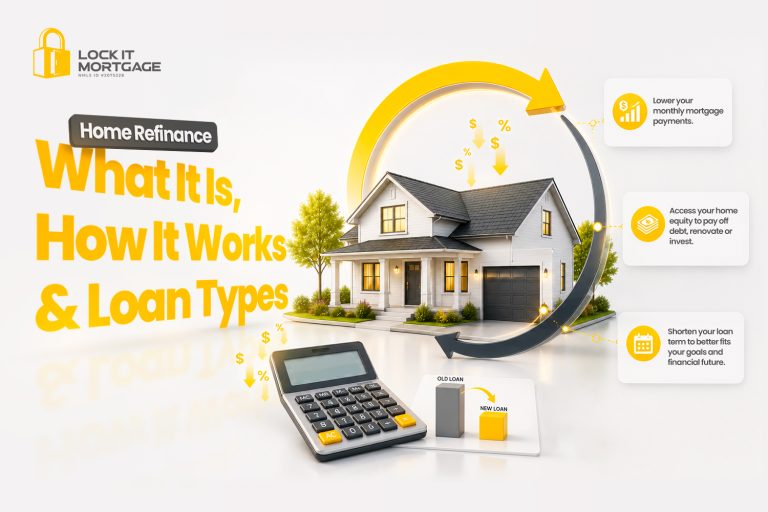
Home refinance is the process of replacing your existing mortgage with a brand-new loan. Think of it as a “reset button” for your debt.
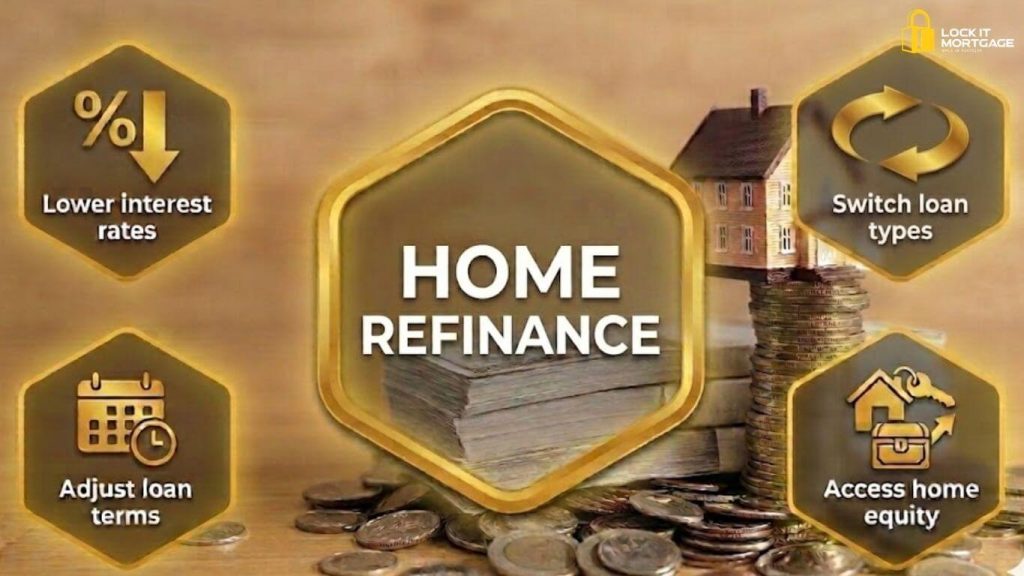
Homeowners typically refinance to lower interest rates and reduce monthly payments, saving thousands in long-term interest costs. Additionally, refinancing allows you to switch loan types, shorten your loan term, or access home equity.
With 2026 home values on the rise, many homeowners now have the equity required to qualify for a refinance with significantly better terms than their original mortgage.

What does refinance mean?
How a home refinance actually works
At its core, a home refinance is a strategic loan replacement. You aren’t simply modifying your existing mortgage, you are securing a brand-new loan with entirely new terms to pay off and retire your current debt.
The “behind-the-scenes” transaction
When you originally purchased your home, your loan funds were directed to the seller. In a refinance, those funds are directed to your current mortgage servicer.
Unless you are doing a “cash-out” refinance, you won’t see the funds hit your bank account. Instead, your new lender coordinates the transaction behind the scenes, paying off your existing mortgage balance in full. Once the original debt is cleared, your old account is closed, and you begin making monthly payments to your new lender under your improved terms.
“Familiar but more simplified” process
For the homeowner, the refinance process will feel familiar, as it mirrors the steps of your original home purchase. You will complete an application, provide financial documentation, and go through a standard underwriting review. However, there are typically two distinct advantages:
- Because you already own the property, you generally won’t need to provide records related to the original title transfer.
- Refinance transactions often carry lower closing fees than a standard home purchase.
Customizing your new terms
The primary advantage of a home refinance is the ability to re-negotiate the rules of your debt. You are no longer restricted to the rate or timeline you agreed to on your original closing day. By replacing the old loan, you gain the flexibility to:
- Secure a lower interest rate to reduce your monthly mortgage payment.
- Adjust your loan term (such as moving from a 30-year to a 15-year mortgage).
- Eliminate unnecessary costs, such as FHA mortgage insurance premiums (depending on eligibility and once your financial situation improves).
Is refinancing your home worth it in 2026?
The refinancing math in motion
The most common reason homeowners choose a home refinance is to secure a better interest rate. This move does more than just lower your monthly bill; it changes the math of your loan so you stop paying the bank so much in interest and start keeping more of your hard-earned money.
Example
You bought your home for $450,000 a few years ago. After your initial down payment, you began with a mortgage balance of $400,000. Thanks to your consistent monthly payments, your balance has now dropped to $380,000.
If today’s market rates are lower than your original rate, you can choose to “swap” your debt from your current lender (Lender A) to a new one (Lender B):
- You apply for a new loan of $380,000 with Lender B.
- Once approved, Lender B pays off your old balance with Lender A in full.
- Your total debt stays the same ($380,000), but the cost of carrying that debt drops.
- Because of the lower rate, your monthly payment is reduced, and a larger portion of every check now goes toward your loan principal instead of just covering interest.
Don’t settle for the first offer you see
A common mistake is assuming you have to refinance with your current bank. While your original lender might offer you a deal to keep your business, you have total freedom to shop the entire market for a better fit.
Why it pays to compare:
- Lenders compete for you: Different banks have different “appetites” for loans. One lender might offer a significantly lower rate just to add your loan to their portfolio.
- Spot the hidden fees: By comparing at least three offers, you can spot who is offering the lowest closing costs, not just the lowest rate.
- You’re a stronger borrower now: Since you first bought your home, you’ve built a track record of on-time mortgage payments and likely increased your home’s equity. This makes you a lower risk to lenders, which often earns you a much better deal than you had on day one.
The bottom line: Never assume your current bank is giving you the best price just because they already have your information. Taking a moment to see what else is out there ensures you aren’t leaving money on the table.
Why homeowners choose to refinance in 2026
Your financial life changes over time. Since the day you signed your original mortgage, you’ve likely built up home equity, improved your credit score, or increased your income. A refinance allows your mortgage to “catch up” to your current success.
Key benefits of a strategic refinance:
- Update homeownership: A refinance is the most seamless time to add or remove someone from the home’s title. Whether you’ve recently married and want to add a spouse, or need to remove a co-signer who helped you buy the home originally, a refinance allows you to update legal ownership while simultaneously getting better loan terms.
- Secure a lower interest rate: Interest rates are always moving. If they have dropped since you bought your home, a refinance can lower your monthly bill and save you tens of thousands of dollars over the life of the loan.

Lowering interest rates is a top reason to refinance
- Customize your loan features: You aren’t stuck with your original terms. You can switch between a predictable Fixed-Rate and an Adjustable-Rate. You can also choose to pay off your home faster by shortening your loan term (e.g., moving from a 30-year to a 15-year).
- Eliminate mortgage insurance: This is a major win for FHA borrowers. Once your home value has grown enough that you have 20% equity, you can refinance into a Conventional loan and completely remove the monthly mortgage insurance payment.
- Access your cash: Through a cash-out refinance, you can use your home’s increased value to fund major life goals, like home renovations, education, or consolidating high-interest credit card debt into one low-interest payment.
Ultimately, a home refinance is about making your mortgage work for you, not the other way around. Whether your goal is to save money each month, pay off your home sooner, or tap into the equity you’ve worked hard to build, the best first step is to see how your current numbers compare to today’s market. With the right strategy, your home can become a much more powerful tool for your financial future.
How long does a refinance actually take?
While every transaction is unique, a home refinance is typically much faster than a home purchase because it involves fewer parties. There is no seller to coordinate with and no moving trucks to schedule. Most refinance loans are ready to close within 2 to 4 weeks.
However, several factors can influence your specific timeline:
- Lender turnaround times: Every mortgage lender has its own internal pace for processing and reviewing documents.
- Market demand: If interest rates drop suddenly, a “refinance boom” can occur. When hundreds of homeowners apply at once, it can slow down the review process for everyone.
- Mandatory waiting periods: Federal regulations require specific “cooling-off” periods after certain disclosures are signed to ensure you have enough time to review your new loan terms and reconsider your moves.
- Property specifics: Issues such as an outdated home survey, title-related clouds, or a delayed home appraisal can add a few days to the calendar.
The strategy for a fast closing: Because you aren’t under a strict purchase contract deadline, you have the advantage of preparation. Having careful and prepared/updated docs required for each program ready to go on day one is the best way to keep your loan moving toward the finish line faster.
3 common types of home refinance
The right refinance option depends entirely on your financial goals and the amount of equity you’ve built in your home. Most borrowers fall into one of these three categories:
Rate-and-term refinance
This is the most common refinance. It allows you to change your interest rate, your loan term (the length of the loan), or both.
- How it works: You replace your current mortgage with a new one for the same balance, but with better terms.
- Common moves:
- Switching from a high-interest 30-year loan to a lower-interest 30-year loan to drop your monthly payment.
- Switching from a 30-year loan to a 15-year loan to pay off your home faster. (Note: While this saves a massive amount of interest, your monthly payment will typically be higher because you are condensing the timeline.)
- The goal: Save money either month-to-month or over the total life of the loan.
- Refinance on your own timeline: A great refinance depends entirely on your specific goals, and an experienced loan officer will help you navigate the best path for your situation:
- The “Short-term” strategy: If you think rates will drop even lower soon, you might choose a low-to-no-cost refinance. This gets you into a better position now without heavy upfront fees, allowing you to refinance again when the market hits a new low.
- The “Long-term” strategy: If you plan on keeping this loan for years to come, it’s usually better to aim for the lowest rate possible, even if it means paying standard closing fees.

Home refinance strategies and mortgage savings
An experienced loan officer should always show you your “Break-Even” point – the exact number of years it takes for your monthly savings (or your cash-out benefit) to cover the cost of the refinance. By timing the market and predicting upcoming trends, they can help you decide exactly when to pull the trigger and lock in your savings.
Cash-out refinance
A cash-out refinance allows you to tap into your home’s value and turn it into liquid cash.
- How it works: Your new loan balance is larger than what you currently owe. The new lender pays off your old mortgage, and you receive the “leftover” difference as a lump sum of cash at closing.
- The primary advantage: While you can often secure a lower interest rate or a shorter repayment term, the main purpose here is the ability to convert your home equity into ready-to-use cash for your biggest expenses.
- Common uses:
- High-Impact Expenses: Funding significant home renovations or paying for education.
- Debt Consolidation: Paying off high-interest credit cards or student loans to simplify your monthly bills.
- Consolidating Mortgages: You can use a cash-out refinance to combine a first and second mortgage into a single, streamlined payment. This is especially helpful if you took out a second mortgage or HELOC after your original home purchase.
- Cash-out refinance example:
- Home Value: $450,000
- Current Balance: $300,000
- New Loan: $350,000
- Result: You pay off the old debt and receive $50,000 in cash (minus closing costs) for home improvements, debt consolidation, or other large expenses.
- Requirements: Because these loans represent more risk to the lender, they typically require higher credit scores, and most programs require you to leave at least 15% to 20% of your home’s equity untapped.
Cash-in refinance
This is the opposite of a cash-out. You bring money to the closing table to pay down your loan balance.
- How it works: By paying down the principal during a refinance, you lower your Loan-to-Value (LTV) ratio.
- Common uses:
- To get a lower rate: Lenders offer better interest rates to borrowers with lower LTVs (e.g., a 75% LTV often gets a better rate than an 80% LTV).
- To cancel mortgage insurance: On a conventional loan, once you pay your balance down to 80% LTV or lower, you can eliminate monthly PMI.
Under strict FHA mortgage requirements, most borrowers must pay Mortgage Insurance Premiums (MIP) for the entire life of the loan. Unlike conventional loans, this mandatory requirement can cost you thousands of extra dollars over time.
However, you aren’t stuck with that fee forever. Once your home value grows or you pay your balance down to 20% equity, you can refinance into a Conventional loan. This move allows you to permanently delete the monthly insurance cost from your monthly mortgage bill.
The “fast-track” home refinance: simple, speedy, and stress-free
If you currently have a government-backed mortgage (FHA loan, VA loan, or USDA loan), you may be eligible for a Streamline Refinance. These programs are the “express lanes” of the mortgage world, designed for homeowners who want to lower their rates without the typical mountain of paperwork.
The biggest win? These programs often allow you to bypass the most time-consuming challenges, such as full income verification and home appraisals.

Streamline refinances make it easier to save money and achieve your homeownership goals.
FHA streamline refinance
The FHA streamline refinance is the most efficient way for FHA borrowers to reduce their monthly mortgage insurance (MIP) and interest costs. Because the FHA already insures your current loan, they prioritize your payment history over your home’s current market value.
- Appraisal waiver: A new home appraisal is generally not required, allowing you to refinance even if your home value hasn’t increased.
- Benefit requirement: To qualify, the new loan must provide a “net tangible benefit“, typically defined as reducing your combined interest rate and insurance premium by at least 0.5%.
- Waiting period: Your loan must be “seasoned,” meaning you have reached the 210-day milestone from your original closing date and have made at least 6 on-time monthly payments.
VA streamline refinance (VA IRRRL)
Exclusively for Veterans and active-duty Service Members, VA streamline refinance (VA IRRRL) is widely considered the simplest refinance program available. Its sole purpose is to lower your interest rate or move you from an adjustable-rate to a stable fixed-rate mortgage.
- Key advantages: This program is built for speed and ease, requiring no home appraisal, no income verification, and minimal paperwork.
- Waiting period: You must wait at least 210 days from the due date of your first mortgage payment before you are eligible to close.
USDA streamline: Rural savings made simple
For homeowners in rural or suburban areas with a USDA loan, the streamline option removes the barriers that often slow down rural refinancing. The USDA places the highest value on your recent history as a reliable payer.
- Simplified approval: Like the FHA and VA versions, this program waives the appraisal and full credit review. The focus is strictly on your ability to manage your current debt.
- Program rules: To qualify, your new loan must result in a significantly lower monthly payment (typically at least $50 less than your current one).
- Income eligibility: Your household income must still fall within the USDA income limits for your specific area.
These programs are the ideal solution if your goal is a lower monthly payment without the headache of a “full” refinance.
Home refinance is more than just a paperwork exercise, it is one of the most powerful tools you have to take control of your financial future. Whether you are looking to lower your monthly overhead, pay off your home years ahead of schedule, or leverage your home’s equity to fund your next big goal, the “perfect time” to act is whenever the numbers align with your goals.
At Lock It Mortgage, we believe that every homeowner deserves a mortgage strategy that is as unique as they are. Having to choose the different programs and timing the market can feel overwhelming, but you don’t have to do it alone. As your go-to partner for all things home finance, our experienced team is here to help you cut through the noise, compare the best rates, and find the “fast-track” to your savings.
Ready to see how much you could save? View your real-time rate quotes here!
Call us: 888-870-5625
Email us: info@lockitmtg.com
Disclaimer: By refinancing your existing loan, your total finance charges may be higher over the life of the loan. The information provided in this guide is for educational and informational purposes only and does not constitute financial, legal, or lending advice. Potential savings depend on individual financial circumstances, including credit score, loan amount, market interest rates, loan terms, and closing costs. All loan programs, rates, and terms are subject to borrower qualification, credit approval, and underwriting guidelines.