


Key Takeaways:
- FHA loan requirements are designed for flexibility, offering a more accessible path to homeownership than most conventional financing. To qualify for the standard FHA guidelines in 2026, borrowers generally need a 580 credit score and a 3.5% down payment.
- To ensure your home is affordable long-term, most lenders look for a steady income and a reliable two-year work history. FHA rules also limit these loans to your primary residence (the place you’ll call home).
- The FHA program stands out because it doesn’t limit how much you can earn to qualify. With more forgiving standards for credit and debt-to-income ratios, it offers an accessible path to homeownership that conventional loans often can’t match. It’s the ideal solution for borrowers who need a flexible start.
Essential FHA loan requirements for 2026
FHA loan requirements are set at the federal level by the Federal Housing Administration to ensure the program remains a consistent tool for homebuyers. If you are preparing to apply for an FHA mortgage in 2026, here are the basic requirements you need to meet:
- 3.5% minimum down payment: This is the standard requirement for the program. Borrowers must provide at least 3.5% of the home’s purchase price as a down payment at closing.
- 580 Credit Score: A FICO score of 580 or higher is required to qualify for the low 3.5% down payment. Borrowers with scores between 500 and 579 are typically required to provide a 10% or more down payment.

Qualifying for FHA mortgage with a 580 FICO score.
- Debt-to-income (DTI) Ratio: while a DTI of 43% is the traditional target, FHA guidelines frequently allow for ratios up to 50% depending on your overall financial profile.
- Primary residence: The property must be your main home where you intend to live full-time. Investment properties and second homes don’t qualify for FHA loans.
- Property standards: Every home must pass an FHA appraisal to verify it meets all federal safety, soundness, and security standards.
- 2026 FHA loan limits: The amount you can borrow is capped based on your county’s cost of living:
- Standard Areas (Floor): $541,287 (1-unit properties)
- High-Cost Areas (Ceiling): $1,249,125 (1-unit properties)
- Special Exception Areas: Per Section 214 of the National Housing Act, limits in Alaska, Guam, Hawaii, and the Virgin Islands are adjusted to account for higher construction costs, reaching up to $1,873,687 for single-family properties.
FHA guidelines offer greater flexibility than conventional programs, allowing you to qualify with a lower credit score or a higher debt-to-income (DTI) ratio. This accessibility is made possible by FHA mortgage insurance, which protects lenders and allows them to offer more lenient approval standards.
To keep the program available for everyone, the FHA requires two types of mortgage insurance premiums (MIP):
- Upfront Mortgage Insurance Premium (UFMIP): For most 30-year mortgages, this is 1.75% of the loan amount. Most borrowers choose to finance this into their total loan balance rather than paying it out of pocket at closing.
- Annual Mortgage Insurance Premium (MIP): This fee generally equals 0.55% of your total loan amount. The lender divides this annual cost into 12 equal parts and adds it directly to your monthly mortgage payment.
Important Note on MIP Duration: Unlike conventional insurance, the FHA usually requires mortgage insurance for the life of the loan. However, if you provide a down payment of 10% or more, the annual MIP expires after 11 years.
FHA loan requirements: Understanding why guidelines vary among lenders
It is a common misconception that FHA loan requirements are the same at every bank. While the Federal Housing Administration sets the baseline eligibility rules, individual mortgage companies often add their own stricter standards, known as “lender overlays”.
Because of these overlays, one lender might turn you down while another is ready to approve your loan. Here is how these variations typically look in practice:
- Credit Score Minimums: While the FHA allows a 580 score for a 3.5% down payment, a specific bank might set their own internal limit at 620 or 640.
- Debt-to-Income (DTI) Limits: One lender may strictly cap your DTI at 43%, while another may be willing to go up to 50% or higher if you have strong cash reserves.
- Income Documentation: You might find that some lenders insist on traditional pay stubs, while others are more experienced in verifying income through tax returns for self-employed borrowers.
- Property Type: Some lenders choose not to finance specific types of homes, such as manufactured homes, unapproved condos, or multi-unit properties (2-4 units), even though the FHA program itself allows them.
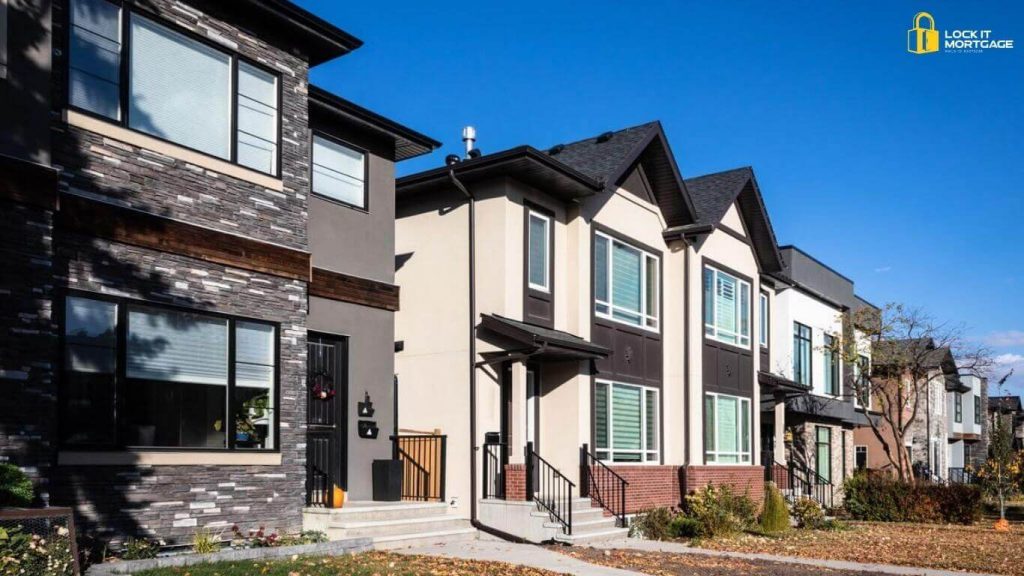
FHA requirements for multi-unit properties, manufactured homes or condos.
- Financial Recovery Timelines: If you’ve had a major credit event like a bankruptcy or foreclosure, the FHA has standard waiting periods. However, some lenders add an extra year or two to those timelines before they will consider an application.
One lender’s rejection doesn’t always disqualify you from an FHA loan. It often just means your financial profile didn’t fit that specific bank’s internal rules.
If you have run into a roadblock, don’t give up. To find the right mortgage broker, you simply need to match your unique financial situation with a lender that offers the right guidelines for your needs.
2026 comparison: FHA loans vs. Conventional loans
FHA loans requirements offer a fantastic alternative to conventional financing, providing nationwide availability without the strict income or geographic barriers found in programs like USDA loans or VA loans.
The primary difference lies in the backing: The government does not insure conventional loans, so lenders rely much more heavily on your personal credit and financial history. In contrast, the FHA program provides insurance to the lender, which allows for much more flexible qualifying rules.
| Feature | Conventional Loan | FHA Loan |
| Credit Score | No minimum score (620+ preferred) | 500 – 579 (with 10% down) or 580+ (with 3.5% down) |
| DTI Ratio | Stricter (typically 43%–45%) | Flexible (up to 50% in certain cases) |
| Down payment | As low as 3% (for qualified buyers) | 3.5% (Depending on eligibility) |
| Standard Loan Limit | 1-Unit: $832,750 (Baseline) 2-Units: $1,066,250 3-Units: $1,288,800 4-Units: $1,601,750 | 1-Unit: $541,287 (Floor) 2-Units: $693,050 3-Units: $837,700 4-Units: $1,041,125 |
| Mortgage Insurance Premium | PMI is cancelable once you reach 20% equity. | Upfront MIP required (1.75% of loan amount). Annual MIP will remain for the life of the loan if the down payment is under 10%. |
| Property Use | Primary residences, vacation homes, rental properties. | Primary residence only. |
To see a full breakdown of benefits and updated 2026 guidelines, visit our FHA loan program overview.
It is a common misconception that conventional is always cheaper because the mortgage insurance can eventually be canceled. However, the right choice depends on your specific financial profile.
- The narrow qualifier: If you barely meet the 620 score requirement for a conventional loan, your interest rate and Private Mortgage Insurance (PMI) might be higher. In this case, an FHA loan even with its upfront premium often results in a lower monthly payment because FHA interest rates are typically more competitive for those in lower credit tiers.
- The high-score saver: If your credit score is in the mid-to-high 700s and you can provide a 10% or 20% down payment, a conventional loan will likely save you more over time because you can eventually remove the monthly insurance cost.

Comparing 2026 FHA vs. conventional loan requirements and flexibility.
Ready to see the math for your situation?
Use our mortgage calculator to estimate how your credit score and down payment will impact your monthly budget, or start your pre-approval today with us to find the right loan structure for your specific financial profile. It’s the best way to shop with confidence, knowing exactly what you can afford and which program fits your long-term goals.
Why an FHA loan is a strategic entry point for 2026 buyers?
Meeting the FHA loan requirements is often the first step toward a broader financial strategy rather than just a backup plan for those who can’t qualify for a conventional loan. In reality, many entrance homebuyers, especially first-time homebuyers (FTHB), choose this program as a strategic financial move to accelerate their path to homeownership. Here is the logic behind this approach:
- Instead of draining your savings to reach a 20% down payment, you only put down 3.5%. This keeps your cash liquid for home improvements, emergency funds, or other investments that may offer a higher return than your home equity.
- FHA interest rates are often lower than conventional rates for borrowers with credit scores below 720. This lower rate can help offset the cost of mortgage insurance, resulting in a more manageable monthly payment.
- You can purchase a 2–4 unit property with the same low down payment as a single-family home. By living in one unit and renting the others, the rental income helps pay your mortgage, essentially letting your tenants build your equity while you live for a fraction of the cost.
- FHA loans are assumable. If you sell your home in the future when market rates are higher, a buyer can “take over” your lower 2026 interest rate. This makes your home much more attractive and potentially more valuable than others on the market.
- Many buyers use the FHA loan to secure a home now. As their credit improves or the home’s value grows, they use that equity to refinance into a conventional loan and cancel the mortgage insurance later.

Choosing an FHA loan isn’t about what you can’t do, it’s about what you can do with the money you save. It is a tool for entering the market early, building equity fast, and keeping your financial options open.
Understanding FHA loan requirements is more than just checking boxes. It’s the first step toward taking control of your financial future. While the low down payment and flexible credit rules make this program highly accessible, its true power is unlocked when you use it as a strategic “Phase One” for your long-term wealth.
Think of the FHA loan as your competitive entry point:
- Stop the rent cycle: Why wait years to save a 20% down payment while home prices continue to rise? With just 3.5% down, you can stop paying a landlord and start building your own equity immediately.
- Maximize your cash flow: FHA interest rates are often lower than conventional rates for many borrowers. This keeps your monthly mortgage payment comfortable, allowing you to maintain your lifestyle while you own your home.
- Fuel your future “Phase Two”: This loan doesn’t lock you in forever. As your home value grows and your credit profile strengthens, we can help you strategically transition into a conventional loan or leverage your built-up equity for your next big move.
At Lock It Mortgage, we don’t just process applications; we build strategies. We believe every borrower deserves a mortgage structure that isn’t just a debt, but a foundation for long-term success.
- Call us: 888-870-5625
- Email us: info@lockitmtg.com